–
Introduction
–
Upgrading or repairing the audio system in a classic GMT800 platform truck requires absolute precision with factory electrical circuits. The 2000 chevy silverado stereo wiring diagram color code dictates how power, ground, illumination, and speaker signals route from the dash harness to the head unit. Misidentifying a circuit can blow fuses, trigger body control module faults, or damage aftermarket amplifiers. Mastering this specific factory wiring scheme ensures clean audio installations, prevents electrical gremlins, and preserves the integrity of the vehicle’s 12-volt DC architecture.
💡 Activity Key Takeaways:
- Core Focus: Printable 2000 Chevy Silverado Stereo Wiring Diagram Color Code designed for creative expression and fine-motor coordination.
- Target Scope: Ideal for toddlers, preschool, kindergarten, and classroom art activities.
- Best Recommendation: Use standard heavy printer paper (24–28 lb) or cardstock for vibrant results with crayons, colored pencils, or washable markers.
–
Core Concepts and Wiring Fundamentals
–
Automotive audio integration relies on a structured 12V DC system utilizing standard copper conductors encased in protective PVC insulation. The factory harness splits circuits into constant power, switched accessory power, dedicated ground, illumination control, and speaker pairs. Constant power maintains memory presets, while switched power activates the receiver only when the ignition cylinder turns. Proper grounding remains paramount in mobile electronics to eliminate alternator whine and ground loop noise.
–
–
Factory speaker channels use twisted pair configurations to cancel electromagnetic interference generated by ignition components and accessory motors. Each speaker circuit features a positive and a negative lead, frequently distinguished by solid colors paired with a striped tracer line. Modifying these circuits requires understanding proper Wire Color Gauge Code principles to handle current draw without excessive voltage drop.
–
[Standard Practice] — Society of Automotive Engineers (SAE) J1288 guidelines specify standardized circuit identification methods for vehicle electrical systems, emphasizing consistent color coding to prevent cross-connection hazards during aftermarket accessory integration.
–
Diagram Explanation and Key Components
–
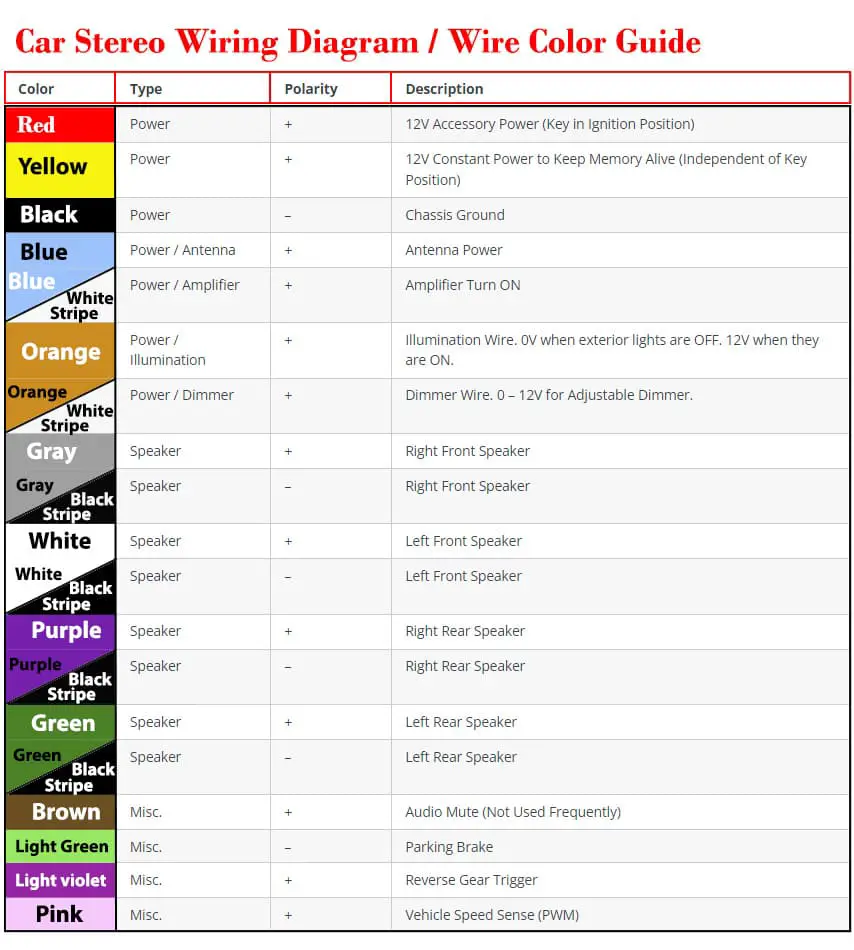
Reading factory schematics for this generation of General Motors trucks demands attention to pinout locations on the main radio connector. The standard 2000 Chevrolet Silverado setup typically features separate power and speaker harnesses plugging directly into the back of the factory radio. Constant battery power routes through an orange wire, while the yellow wire provides accessory power switched through the ignition switch.
–
–
The ground connection is reliably identified by a black wire bolted securely to metal dash bracing behind the center console. Speaker color codes follow a strict pairing convention: dark green and dark green with a black stripe designate the left rear speaker, light green and purple designate the left front speaker, dark blue and light blue handle the right rear, and light green with black or grey strips manage the right front channels. Cross-referencing these designations with reliable Wiring Diagram references prevents phase inversion issues that severely degrade audio quality.
–
Common Problems and Troubleshooting Methods
–
Audio system failures in these trucks frequently stem from corroded ground points, blown radio fuses located in the instrument panel fuse block, or degraded factory speaker foam. Diagnostic procedures begin with a digital multimeter set to DC voltage to verify that constant and switched power supplies reach the harness connector. Testing continuity between the ground pin and chassis metal isolates open ground circuits.
–
–
When speakers produce static or fail entirely, technicians employ an impedance test or a low-voltage pop test to trace wiring integrity through the door boots. Pinch points inside rubber door conduits commonly shear copper strands over years of opening and closing doors. Proper diagnosis focuses on isolating whether the fault originates within the head unit, the wiring harness, or the speaker drivers themselves, treating troubleshooting as a systematic elimination process rather than guessing at component replacement.
–
Practical Tips and Safety Considerations
–
Working on vehicle electrical systems mandates disconnecting the negative battery terminal before cutting or splicing factory wires to prevent accidental short circuits against uninsulated dash frames. Soldering connections or utilizing heat-shrink butt connectors ensures mechanical strength and long-term resistance to oxidation caused by cabin humidity. Twisting wires together and wrapping them in electrical tape invites intermittent failures as cabin temperatures fluctuate.
–
–
Installers should always match appropriate gauge sizes—typically 16 to 18 AWG for speaker runs and 14 to 16 AWG for power feeds—to match factory specifications. Neglecting proper fuse sizing when integrating high-draw aftermarket head units or external amplifiers creates severe fire hazards within the dashboard cavity. For related exterior and auxiliary power distribution layouts, technicians frequently consult references dedicated to Automotive Wiring best practices.
–
Conclusion
–
Navigating the electrical architecture of early 2000s GM trucks relies heavily on accurate interpretation of factory color codes and pin configurations. Adhering to proper stripping, soldering, and insulation techniques guarantees a reliable installation that protects sensitive vehicle computers. Respecting foundational circuit rules ensures optimal audio performance and long-term electrical safety.
Key Specifications & Age-Group Overview
| Age / Grade Group | Target Skill Focus | Recommended Medium |
|---|---|---|
| Toddlers (Ages 2–4) | Hand-eye coordination & broad motor grasp | Jumbo crayons & washable finger paints |
| Early Elementary (Ages 5–7) | Line boundaries & fine pencil control | Standard colored pencils & fine-tip markers |
| Intermediate (Ages 8+) | Color blending, shading & artistic patience | Watercolor pencils, gel pens & dual-brush markers |
Images References

–

–

–

–