– –
– – Optimizing Your Game: The Enduring Legacy of Cable Cat5 Diagram Ethernet Wiring in Gaming Performance
– In the high-stakes world of online gaming and competitive esports, every millisecond counts. While flashy graphics cards and lightning-fast processors often grab the headlines, the unsung hero of a seamless player experience often lies in the foundational network infrastructure. Among these crucial elements, the humble Ethernet cable, specifically the principles behind a cable Cat5 diagram ethernet wiring, played a pivotal role in shaping the early landscape of online multiplayer and continues to underpin the stability demanded by today’s gaming meta. This article delves into how the intricacies of properly wired network connections have directly influenced gameplay, player strategies, and the competitive integrity of video games across generations.
💡 Technical Key Takeaways:
- Core Focus: Diagnostic schematic and terminal connection layout for Cable Cat5 Diagram Ethernet Wiring.
- Target Scope: Field technicians, automotive DIYers, and residential/commercial electricians.
- Safety Rule: Always disconnect the primary power source/battery terminal and verify zero voltage with a multimeter before touching wires.
– Background and Core Idea
– The Cat5 (Category 5) Ethernet cable emerged as a standard in the mid-1990s, offering a significant leap over previous networking technologies by supporting speeds up to 100 Mbps. Crucially, its introduction coincided with the nascent boom of consumer broadband internet and the rapid ascent of online multiplayer gaming. Titles like Quake III Arena, Counter-Strike 1.6, and StarCraft: Brood War began to define a new era of competitive play, where low latency and stable connections were paramount. However, achieving this stability often required players to move beyond unreliable dial-up or early Wi-Fi and embrace wired connections. For more related activities, check out our Cat6E Ethernet Distance Stable.
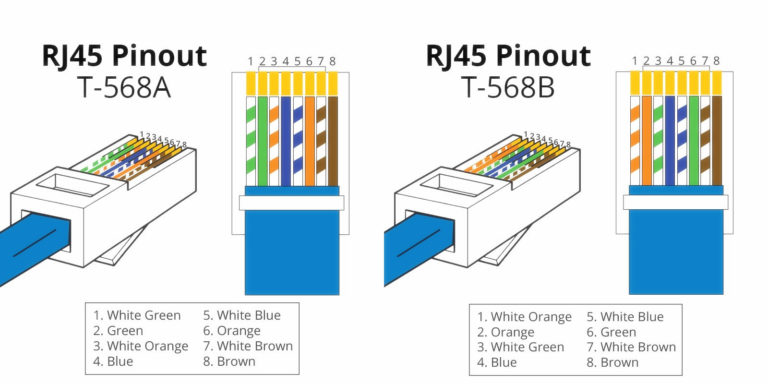
– The core idea of a cable Cat5 diagram ethernet wiring refers to the specific configurations (T568A and T568B) dictating how the eight individual wires inside an Ethernet cable must be arranged and terminated into an RJ45 connector. For many early adopters and enthusiasts, understanding these diagrams was not merely a technicality but a practical necessity. Building custom-length cables for burgeoning LAN parties or troubleshooting home network issues became a shared skill within the gaming community. Proper wiring ensured signal integrity, minimized interference, and maximized the precious bandwidth available, directly translating into a smoother, more responsive gameplay experience free from dropped packets or intermittent lag spikes.
– Key Discussion and Analysis
– The direct impact of reliable Ethernet wiring on gameplay mechanics is profound. In fast-paced first-person shooters, for instance, the difference between a properly wired connection and a sub-optimal one could be the deciding factor in a firefight. Reduced latency (ping) meant that player inputs registered almost instantaneously with the game server, mitigating issues like “peeker’s advantage” where a player with higher ping might appear to move and shoot before their actual position is updated for opponents. For fighting game enthusiasts, precise frame data and input timing are the bedrock of competitive play; a stable, low-latency connection ensures that these critical mechanics function as intended, preventing desynchronization that can ruin a match.
– While Cat5 itself has largely been superseded by Cat5e (Gigabit Ethernet) and Cat6 (higher bandwidth and reduced crosstalk), the foundational principles illustrated by the cable Cat5 diagram ethernet wiring remain entirely relevant. These diagrams taught gamers and network enthusiasts about the importance of correct termination and cable integrity. A poorly terminated cable, with wires out of sequence or improperly shielded, could introduce signal degradation, leading to packet loss and unpredictable network performance. This directly impacted the player experience, manifesting as rubber-banding, delayed abilities in MMORPGs, or outright disconnections from online matches, frustrating players and compromising competitive integrity.
– The evolution from Cat5 to more advanced cables underscores a continuous demand for greater speed and stability, driven largely by the increasing complexity and data requirements of modern online games. Yet, the core lesson that the physical layer of the network is paramount persists. The focus on optimal wiring isn’t just about raw speed; it’s about eliminating variables that could introduce instability, ensuring a consistent and fair digital battlefield for all participants.
– Community and Competitive Impact
– Within the gaming community, the pursuit of optimal network performance has always been a significant talking point. Forums and online guides for PC gaming often featured detailed instructions on how to properly wire Ethernet cables, demonstrating a collective understanding among dedicated players that their hardware setup extended beyond the PC components. This shared knowledge fostered a DIY culture, where players empowered themselves to troubleshoot and optimize their own gaming environments, directly improving their individual player experience and that of their LAN party peers.
– In the realm of esports, the standards for network reliability are uncompromising. While professional tournaments now exclusively utilize Cat6A or even fiber optic connections for their main stages, the meticulous attention to detail regarding cable integrity and proper termination traces its lineage directly back to the principles encapsulated in the cable Cat5 diagram ethernet wiring. Every professional esports arena is a testament to robust network engineering, designed to eliminate any potential points of failure that could impact a high-stakes match. A miswired cable, even if theoretically functional, introduces an unacceptable risk of intermittent issues during live broadcasts watched by millions, directly influencing the outcome of matches and the careers of professional players. The competitive scene demands an environment where skill, strategy, and game sense are the sole determinants of victory, free from the interference of network instability.
– Modern Perspective
– Today, while Cat5 cables are less commonly installed new, the wisdom derived from understanding a cable Cat5 diagram ethernet wiring continues to be invaluable. Modern gamers may not be terminating their own Cat6 cables daily, but the underlying principles inform best practices for home network setups. The recommendation to use a wired Ethernet connection over Wi-Fi for competitive gaming remains a cornerstone of advice, irrespective of the specific cable category. This advice is rooted in the inherent stability, lower latency, and higher sustained bandwidth that a properly installed wired connection offers.
– Game developers, too, implicitly rely on these foundational network standards. While netcode optimization can mitigate some effects of lag, it cannot overcome a fundamentally unstable physical connection. The ideal scenario for game mechanics, from hit registration in battle royales to spell casting in MOBAs, assumes a relatively consistent and low-latency network. The legacy of Cat5 wiring diagrams, therefore, extends to the very design and tuning of online game experiences, influencing how developers balance responsiveness with network robustness.
– Conclusion
– The seemingly technical topic of cable Cat5 diagram ethernet wiring is far more than a mere detail of network infrastructure; it is a fundamental pillar upon which modern online gaming, competitive esports, and a superior player experience have been built. From the early days of LAN parties and nascent online arenas to today’s global esports circuits, the understanding and application of proper Ethernet wiring principles have consistently provided the stable, low-latency connections essential for competitive integrity and immersive gameplay. While technology evolves, the foundational lesson of ensuring a robust physical network connection remains a timeless truth, underscoring its enduring legacy in the ever-advancing world of video games.
– FAQs
-
–
-
– – Why is a wired Ethernet connection generally preferred over Wi-Fi for gaming? A wired Ethernet connection offers lower latency (ping), greater stability, and higher consistent bandwidth compared to Wi-Fi. This means fewer lag spikes, faster reaction times, and fewer disconnections, all crucial for a competitive and enjoyable player experience.
– -
– – What is the main difference between Cat5, Cat5e, and Cat6 cables in a gaming context? Cat5 supports up to 100 Mbps, Cat5e supports up to 1 Gbps, and Cat6 supports up to 10 Gbps over shorter distances. For most modern gaming, Cat5e or Cat6 are recommended as they provide ample bandwidth and superior interference resistance, ensuring a smoother connection for gameplay.
– -
– – Can a poorly wired Ethernet cable actually affect my gameplay performance? Absolutely. A cable that is incorrectly wired or damaged can lead to signal degradation, increased packet loss, and higher latency. This can manifest as noticeable lag, stuttering, “rubber-banding” of characters, or even frequent disconnections, directly impacting your ability to play effectively and enjoy the game.
– -
– – Do professional esports events still use Cat5 cables for their setups? No, professional esports events typically utilize higher-category cables such as Cat6A or even fiber optic connections. These provide superior speed, bandwidth, and resistance to interference, ensuring the utmost reliability and minimal latency for high-stakes competitive gameplay, though the fundamental wiring principles originate from Cat5 standards.
– -
– – Is understanding a Cat5 diagram still useful for a modern gamer? While you might not be wiring Cat5 cables yourself, understanding the principles behind a Cat5 diagram (T568A/B standards) provides crucial insight into why proper network infrastructure is vital. It highlights the importance of using high-quality cables, ensuring secure connections, and prioritizing wired over wireless for optimal gaming performance, lessons that are timeless for any serious gamer.
–
–
–
–
–
– –
Quick Wiring Specifications & Terminal Guide
| Component / Circuit | Standard Wire Gauge | Recommended Protection |
|---|---|---|
| Control & Trigger Signals | 18 – 20 AWG | 5A – 7.5A Inline Fuse |
| Standard Auxiliary Load | 14 – 16 AWG | 15A – 20A Circuit Breaker |
| Main Power Feed / Supply | 10 – 12 AWG | 30A – 40A Heavy-Duty Relay |
Images References
– –
– –
– –
– –
– –
– –
– –
– –
– –
– –
– –
– –
– –
– –
– –
– –
Explore more technical diagrams and schematics in our comprehensive ethernet network collection for detailed circuit walkthroughs.