– –
– – Unraveling the “Cloth House”: Identifying Old Wiring in Video Game Design
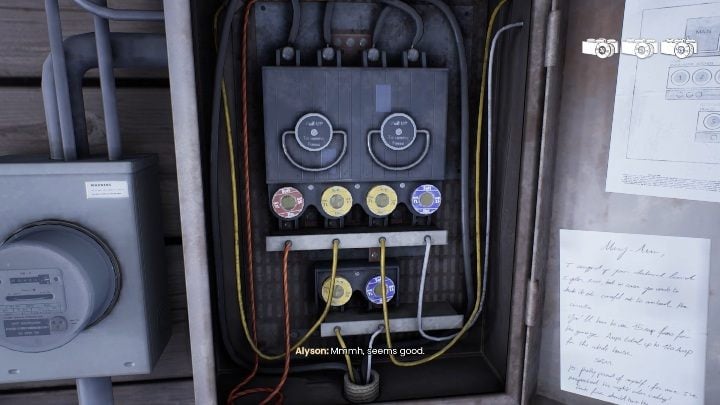
– In the intricate ecosystem of video games, where cutting-edge graphics often overshadow the complex machinery beneath, the concept of “cloth house identification old wiring” emerges as a crucial analytical lens. This metaphorical framework helps us understand how the foundational, often legacy, code and design philosophiesthe “old wiring”continue to influence the observable, updated exterior of a gameits “cloth house.” It’s the critical process of discerning how deep-seated architectural choices, made perhaps decades ago, manifest in current gameplay mechanics, persistent quirks, or even the strategic meta of competitive esports. For developers, players, and industry analysts alike, identifying this ‘old wiring’ is paramount to comprehending a game’s true behavior, its technical debt, and the long-term trajectory of a beloved franchise.
💡 Technical Key Takeaways:
- Core Focus: Diagnostic schematic and terminal connection layout for Cloth House Identification Old Wiring.
- Target Scope: Field technicians, automotive DIYers, and residential/commercial electricians.
- Safety Rule: Always disconnect the primary power source/battery terminal and verify zero voltage with a multimeter before touching wires.
– Background and Core Idea
– The metaphor of “cloth house identification old wiring” posits that many video games, particularly those with long development cycles, multiple iterations, or extensive live-service phases, are akin to structures that have seen numerous renovations. The “cloth house” represents the visible, often aesthetically pleasing surface: the high-fidelity textures, sophisticated character models, dynamic lighting, and expansive environments that constantly evolve with technology. This is what players immediately see and interact with. However, beneath this modern facade lies the “old wiring”: the original engine architecture, the legacy netcode, fundamental physics systems, core gameplay loops established early in development, or even specific collision detection methodologies. These are the underlying systems that dictate a game’s most fundamental behaviors and limitations, regardless of how much polish is applied to the exterior. For more related activities, check out our Barb Wire On Bases Dayz.
– The “identification” aspect is where critical analysis comes into play. Its the act of recognizing how these deeply embedded, often immutable, systems from a game’s past continue to dictate its present. A beautifully rendered open world might still exhibit the same pathfinding glitches as its decade-old predecessor due to inherited engine logic. A new character in an esports title might move or interact in ways that betray the specific physics parameters of a game engine designed twenty years ago. Understanding this distinction is key to dissecting player experiences, analyzing game performance, and predicting development challenges.
– Key Discussion and Analysis
– The impact of “old wiring” is pervasive, extending from game development through to player experience. For developers, it manifests as significant technical debt. Building new features or fixing bugs often becomes a delicate dance around archaic code, where seemingly simple changes can trigger unforeseen cascades of issues due to the interconnected nature of the “old wiring.” Bethesda’s Creation Engine, for instance, a direct descendant of the Gamebryo engine, is famous for its enduring quirks and limitations across titles like Skyrim and Fallout. Despite graphical overhauls and new gameplay mechanics, players consistently “identify” familiar eccentricitieslike object physics glitches or specific AI behaviorsthat are deeply rooted in the engine’s foundational “wiring.”
– From a gameplay perspective, “old wiring” often gives rise to unique mechanics or quirks that become iconic. The bunny-hopping phenomenon in classic first-person shooters like Quake and Counter-Strike 1.6, for example, wasn’t an intentional feature but an emergent property of their early engine physics. Players learned to “identify” and master these unintended interactions, transforming them into high-skill maneuvers. Similarly, certain hit registration behaviors or weapon recoil patterns in long-running competitive franchises like Call of Duty often retain elements of their original implementations, becoming part of the franchise’s unique “feel” that veteran players intuitively “identify.” This connection between the game’s observable “cloth house” and its underlying “old wiring” becomes a crucial element of its identity and competitive meta.
– Community and Competitive Impact
– In the realm of esports, the identification of “old wiring” is critical for competitive advantage and strategic depth. Professional players and analysts meticulously study game mechanics to uncover subtle interactions stemming from the game’s foundational systems. In games like Rocket League, the nuanced physics enginepart of its “old wiring”allows for incredibly precise aerial maneuvers and ball control, defining its high skill ceiling. Teams that master these physics properties, identifying their predictable and exploitable elements, gain a significant edge in the competitive scene. Similarly, in titles with a long competitive history, specific map exploits or character interactions that leverage engine quirks become known as “legacy tech,” passed down through player communities.
– Player expectations are also heavily shaped by the “old wiring.” When a new installment in a beloved franchise emerges with a drastically different feela completely new “cloth house” built on entirely different “wiring”it can often lead to significant community backlash. Players expect a certain consistency in core mechanics, even if the visuals are updated. This phenomenon highlights how deeply embedded the “old wiring” is in player muscle memory and perception, often outweighing superficial graphical improvements. The dedicated modding community, too, frequently engages directly with the “old wiring,” creating unofficial patches, quality-of-life improvements, or entirely new experiences by delving into and altering the game’s core programming that the original developers left behind.
– Modern Perspective
– Today, the concept of “cloth house identification old wiring” is particularly relevant in the era of remakes, remasters, and persistent live-service games. Remasters often involve polishing the “cloth house” (graphics, UI) while leaving much of the “old wiring” intact, leading to a familiar but visually enhanced experience. Examples like the Mass Effect Legendary Edition successfully updated visuals while retaining the core gameplay and movement quirks. However, full remakes, like the recent Resident Evil series or Final Fantasy VII Remake, attempt to replace or significantly overhaul the “old wiring,” which, while offering a fresh experience, can sometimes alienate players who cherished the original mechanics and feel.
– Live-service titles constantly add new rooms to their “cloth house” in the form of content updates, events, and features. Yet, underlying engine limitations or initial design choicesthe “old wiring”frequently resurface as persistent bugs, performance issues, or constraints on future innovation. Destiny 2, for instance, has openly discussed the challenges of its evolving content interacting with its foundational engine architecture. The industry is increasingly focused on modular design and future-proofing in new game development, precisely to avoid accumulating this kind of “old wiring” that can hinder long-term support and innovation. However, for many existing titles, especially those with competitive scenes, the careful identification and understanding of this “old wiring” remains crucial for both longevity and continued player engagement.
– Conclusion
– The analytical concept of “cloth house identification old wiring” provides a powerful framework for dissecting the complex interplay between a video game’s visible presentation and its underlying technical and design foundations. It illuminates why certain gameplay mechanics persist, why technical debt accumulates, and how game franchises maintain or evolve their core identity. For players, it deepens the appreciation for game design and fosters a more nuanced understanding of player experience. For developers, it underscores the long-term impact of early technical decisions. And for the esports world, it offers critical insights into the fundamental forces that shape competitive strategy and meta. Ultimately, recognizing the “old wiring” beneath the renovated “cloth house” is essential for a truly insightful analysis of the dynamic and ever-evolving landscape of video games.
– FAQs
-
–
-
– – What does “old wiring” mean in game development?
– – In game development, “old wiring” metaphorically refers to legacy code, foundational engine architecture, original physics systems, or core design philosophies established early in a game’s development that continue to influence its behavior and limitations, even if the visible aspects have been updated.
– -
– – How does “old wiring” impact competitive gaming?
– – “Old wiring” can significantly impact competitive gaming by creating unique movement quirks, specific hitbox behaviors, or physics interactions that pros learn to master and exploit. These often become high-skill mechanics that define a game’s competitive meta and strategic depth, such as bunny-hopping in older FPS titles or precise aerial control in Rocket League.
– -
– – Can game remasters completely eliminate “old wiring”?
– – Game remasters typically focus on updating the “cloth house” (graphics, sound, UI) while largely retaining the “old wiring” (core gameplay mechanics, engine logic). While some quality-of-life improvements might be made, a complete elimination of “old wiring” usually requires a full remake, which rebuilds the game from the ground up on new foundational systems.
– -
– – Why do players sometimes prefer games with “old wiring” quirks?
– – Players, especially long-time fans of a franchise, often develop muscle memory and an appreciation for the unique “feel” and quirks that stem from a game’s “old wiring.” These elements become part of the game’s identity, and removing them in newer iterations can sometimes lead to a sense of loss or alienation, even if the new version is technically more polished.
– -
– – How do developers manage “technical debt” from “old wiring”?
– – Developers manage technical debt from “old wiring” through various strategies, including refactoring code (reorganizing existing code without changing external behavior), targeted engine upgrades, or sometimes simply designing new features to work around the limitations of the existing systems. In some cases, for very old and complex “wiring,” they may opt for a full remake rather than trying to continually patch over deep-seated issues.
–
–
–
–
–
– –
Quick Wiring Specifications & Terminal Guide
| Component / Circuit | Standard Wire Gauge | Recommended Protection |
|---|---|---|
| Control & Trigger Signals | 18 – 20 AWG | 5A – 7.5A Inline Fuse |
| Standard Auxiliary Load | 14 – 16 AWG | 15A – 20A Circuit Breaker |
| Main Power Feed / Supply | 10 – 12 AWG | 30A – 40A Heavy-Duty Relay |
Images References
– –
– –
– –
– –
– –
– –
– –
– –
– –
– –
– –
– –
– –
– –
– –
– –
Explore more technical diagrams and schematics in our comprehensive wiring diagram collection for detailed circuit walkthroughs.