– –
– – Optimizing Gaming Performance: The Crucial Role of Cable Diagram Ethernet Termination
– In the high-stakes world of competitive gaming and the intricate ecosystem of game development, the discussion often revolves around processing power, graphics cards, and high refresh rate monitors. However, an often-overlooked yet fundamentally critical element underpinning all modern online interactive experiences is network infrastructure. Specifically, the meticulous planning and execution represented by a cable diagram ethernet termination holds profound significance. This seemingly technical detail directly translates into the stable, low-latency connections essential for smooth gameplay, fair competitive scenes, and efficient game production. Without correctly terminated Ethernet cables, even the most powerful gaming rig or meticulously crafted online “features” can be rendered frustratingly unreliable, profoundly impacting the overall player experience.
💡 Technical Key Takeaways:
- Core Focus: Diagnostic schematic and terminal connection layout for Cable Diagram Ethernet Termination.
- Target Scope: Field technicians, automotive DIYers, and residential/commercial electricians.
- Safety Rule: Always disconnect the primary power source/battery terminal and verify zero voltage with a multimeter before touching wires.
– Background and Core Idea
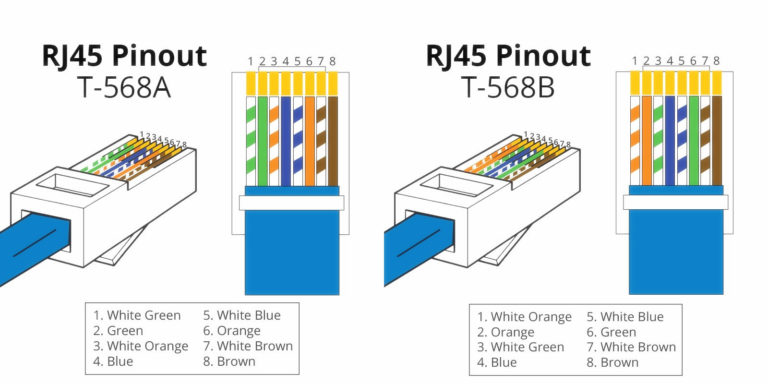
– At its core, a cable diagram ethernet termination illustrates the precise wiring scheme for connecting conductors within an Ethernet cable to the pins of an RJ45 connector. The two primary standards, T568A and T568B, dictate the specific order of the twisted pairs. While seemingly minor, adherence to these standards is paramount for signal integrity, minimizing crosstalk and ensuring optimal data transfer speeds. Historically, the evolution of network cabling from cumbersome coaxial setups used in early LAN parties to the ubiquitous twisted-pair Ethernet directly enabled the sophisticated online multiplayer experiences gamers enjoy today. Early network engineers and diligent home gamers alike understood that a perfectly terminated cable was the bedrock for any successful online session. These diagrams serve as blueprints, not just for installation, but also for troubleshooting, ensuring that the physical layer of the network provides a reliable conduit for the complex data streams of modern gaming.
– Key Discussion and Analysis
– The impact of proper cable diagram ethernet termination on the gaming landscape is multifaceted and pervasive. For the individual player, especially those immersed in competitive titles, a stable wired connection is a non-negotiable part of their “strategy.” Sub-optimal termination can introduce packet loss, increase ping (latency), and cause intermittent disconnections, directly translating into frustrating lag spikes and unfair losses. This directly compromises the “player experience,” turning what should be an enjoyable challenge into an exercise in futility. In genres like first-person shooters or fighting games, where split-second reactions are crucial, even a few milliseconds of added latency due to a poorly terminated cable can be the difference between a headshot and a missed opportunity, fundamentally altering gameplay mechanics.
– Beyond the individual, the integrity of network cabling is even more critical in the professional “competitive scene” of esports. Major tournaments, streaming operations, and broadcast centers rely on robust, redundant network infrastructure. A single faulty termination within the vast web of cables at an esports arena could disrupt a live match, leading to costly delays, competitive disadvantages, and a negative impact on the entire event’s integrity. Organizers meticulously follow cable diagrams ethernet termination to ensure every connection adheres to standards, providing the rock-solid foundation necessary for fair play and seamless streaming to millions of viewers. This level of precision is part of the unspoken “meta” for successful event management.
– Furthermore, in game development studios, reliable internal networks are indispensable. Development teams collaborate on massive game files, complex codebases, and continuous builds. Efficient data transfer facilitated by correctly terminated cables ensures smooth workflows, faster iteration cycles, and accurate version control. Faulty cabling can slow down development, introduce errors, and ultimately impact the release schedule and the quality of the final product, including its online “features.”
– Community and Competitive Impact
– The gaming community, particularly its most dedicated members, implicitly understands the value of a solid network connection. While most home users may not perform their own Ethernet terminations, the awareness of quality cabling and professional installation contributes significantly to optimizing their home gaming setups. Countless “reviews” of network hardware, routers, and even Ethernet cables highlight the community’s drive for minimal latency and maximum stability, all of which trace back to the physical integrity of the connection. This drive forms a crucial part of a player’s overall “strategy” to gain a competitive edge, ensuring that their performance is limited only by their skill, not their connection.
– In the esports arena, the impact is magnified. Events like The International for Dota 2 or the League of Legends World Championship are multi-million dollar productions where network stability is paramount. Detailed cable diagram ethernet termination plans are meticulously drafted and implemented, often with redundant systems, to prevent any single point of failure. The flawless execution of these connections directly enables the high-fidelity gameplay and real-time data transfer required for professional competitive matches, shaping the very flow of the “meta” as players execute complex team strategies without fearing technical disruptions.
– Modern Perspective
– In today’s gaming landscape, the relevance of a meticulously planned cable diagram ethernet termination remains undiminished, even amidst advancements in wireless technology. While Wi-Fi 6 and Wi-Fi 7 offer impressive speeds and lower latency than their predecessors, a wired Ethernet connection, correctly terminated, continues to be the gold standard for competitive gaming due to its unparalleled stability and consistent low latency. The increasing bandwidth demands from 4K streaming, massive game updates, cloud gaming services, and virtual reality experiences only underscore the foundational importance of robust physical network infrastructure.
– As gaming evolves with more sophisticated “mechanics” and online “features,” the invisible work of a precisely terminated Ethernet cable continues to ensure that the digital world can seamlessly connect to the physical one, providing a lag-free portal to virtual realms. The standards set forth in these diagrams guarantee that data travels efficiently and without corruption, allowing game developers to push boundaries and players to experience gameplay as intended, free from frustrating network-induced performance issues.
– Conclusion
– The seemingly mundane technical detail of cable diagram ethernet termination stands as an unseen but vital pillar supporting the entire edifice of modern online gaming. From the intricate “gameplay” of top-tier esports tournaments to the seamless “player experience” of a casual online match, the reliability and speed afforded by correctly terminated Ethernet cables are indispensable. This foundational precision prevents frustrating latency, ensures competitive fairness, and enables game developers to innovate without network limitations. As gaming continues to evolve, the principles embodied in a proper cable diagram ethernet termination will remain critical, silently safeguarding the integrity and enjoyment of countless digital adventures and competitive endeavors across every gaming “franchise history.”
– FAQs
-
–
-
– – Why is wired Ethernet preferred over Wi-Fi for competitive gaming? Wired Ethernet provides superior stability, significantly lower and more consistent latency (ping), and eliminates interference issues common with Wi-Fi, offering a crucial competitive advantage in fast-paced games.
– -
– – How does poor cable termination affect gameplay latency? Poor termination can cause signal degradation, crosstalk, and packet loss, leading to increased latency (lag), intermittent disconnections, and a generally unstable connection that negatively impacts gameplay and player experience.
– -
– – Are cable diagrams important for esports event organizers? Absolutely. Detailed cable diagrams are essential for planning, installing, and troubleshooting the complex, high-performance network infrastructure required for esports events, ensuring stable connections for players, broadcasters, and audience streaming.
– -
– – Can different Ethernet termination standards (T568A vs. T568B) impact gaming performance? No, as long as both ends of a cable use the same standard (either T568A or T568B), there is no difference in performance. Mixing standards (e.g., A on one end, B on the other) creates a crossover cable, which is generally not needed for modern network devices.
– -
– – What role does proper cabling play in game development environments? Properly terminated cabling ensures high-speed and reliable data transfer for large game files, collaborative coding, and continuous integration/testing within development studios, significantly improving workflow efficiency and reducing development time for new game features.
–
–
–
–
–
– –
Quick Wiring Specifications & Terminal Guide
| Component / Circuit | Standard Wire Gauge | Recommended Protection |
|---|---|---|
| Control & Trigger Signals | 18 – 20 AWG | 5A – 7.5A Inline Fuse |
| Standard Auxiliary Load | 14 – 16 AWG | 15A – 20A Circuit Breaker |
| Main Power Feed / Supply | 10 – 12 AWG | 30A – 40A Heavy-Duty Relay |
Images References
– –
– –
– –
– –
– –
– –
– –
– –
– –
– –
– –
– –
– –
– –
– –
– –
Explore more technical diagrams and schematics in our comprehensive ethernet network collection for detailed circuit walkthroughs.